Getting around Nepal
Redefined personal space - always more room in the back

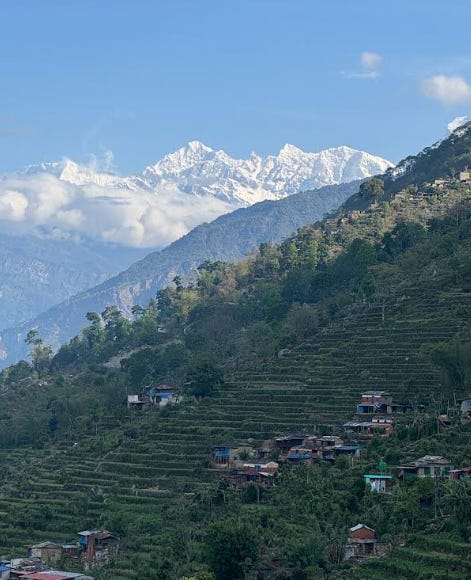
So, how do we and other Nepalis get around? First off, vehicle ownership is a rare luxury in our village, and in other rural villages throughout Nepal. The primary reason is economic as the average Nepalis’ annual income is $2,800/year. There is a wide income disparity across the country, making the income level even lower in rural regions, so vehicle ownership is not in the picture. It is a much different story in Kathmandu and other larger cities.
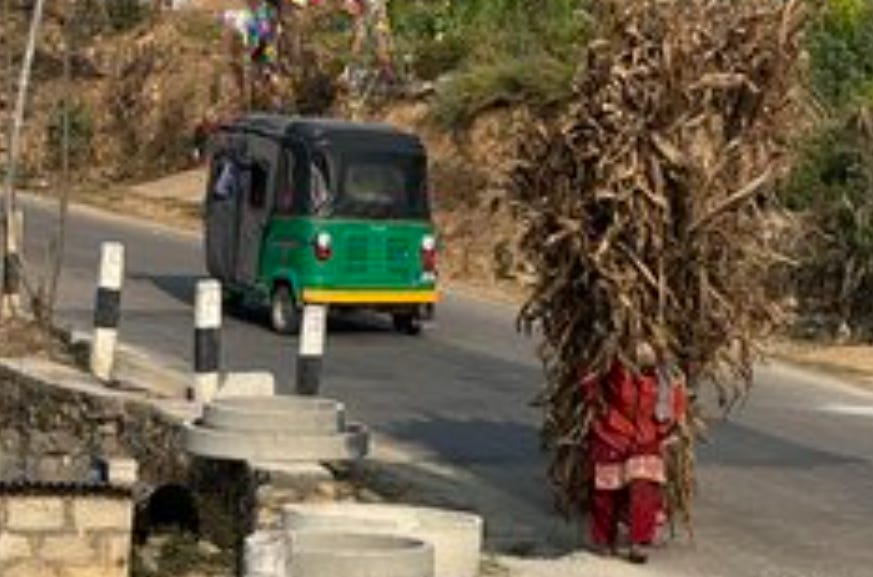
But Nepalis are industrious and there is a thriving private vehicle/jeeps for hire that provides for a lot of the local transportation needs. We have yet to see an American-style Jeep, most of the vehicles that provide local transport are Indian manufactured, underpowered four-cylinder, four-wheel drive, three row jeeps. Not large at all, more like a small SUV with a third seat shoved in the back and 2” behind the third seat for luggage. Probably officially listed as 9 passengers, but more like a six passenger by USA standards and leg room for individuals shorter than 5’. Luggage is either on the roof or in your lap. We’ve ridden a couple of hours when the number of passengers grew to 11 adults plus four toddlers.
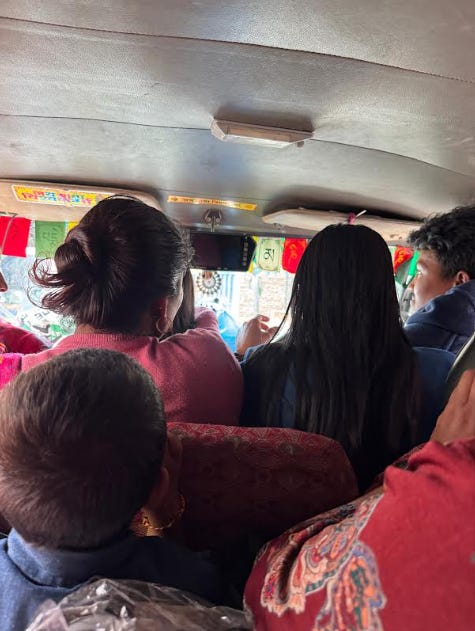
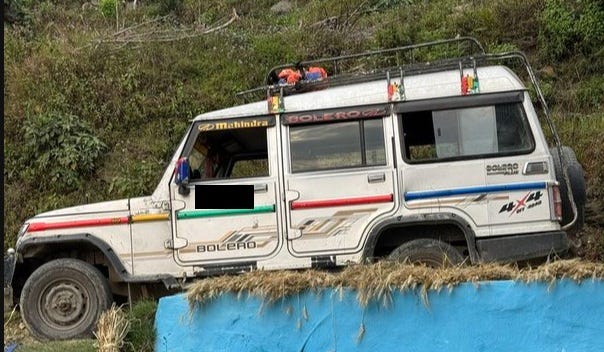
It might take a half hour or more to get everybody loaded. The temperature rises in the jeep with no additional air flow. Nepalis don’t mind at all. They seem perfectly comfortable in the rising heat while wearing jackets or sweaters. Meanwhile, we are fanning ourselves and wearing a single layer of summer clothes.
We have redefined our expectations of personal space, part of our Nepali cultural training. It is truly amazing that everybody just does their part to make it work, including putting someone else’s luggage on your lap, having someone sit on your lap, or even having multiple passengers take a shortcut to the road leaving town and jump on the roof at a designated final fill point. Because most of the rides are coordinated to head directly to a village, passengers are family members or neighbors, and it all just works. We’re fortunate that our local village has several jeeps that service the town and one even parks his vehicle overnight at our host families’ house. By American standards, the jeep travel is very affordable. On a recent trip to a major town recently, we paid $5.35 each for a two-hour ride one way. There are also vans (and some EV vans) and “two rows” pickup trucks with the back bed converted with side bench seats as local transportation.
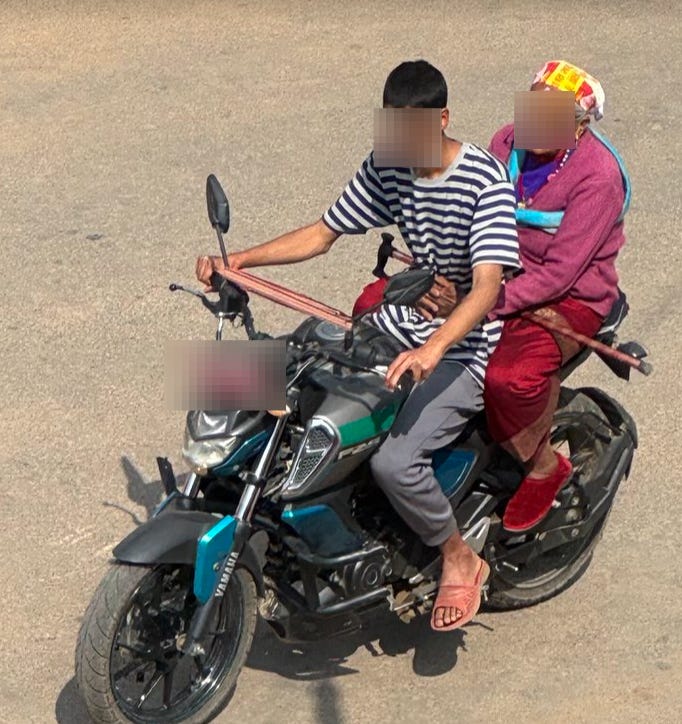
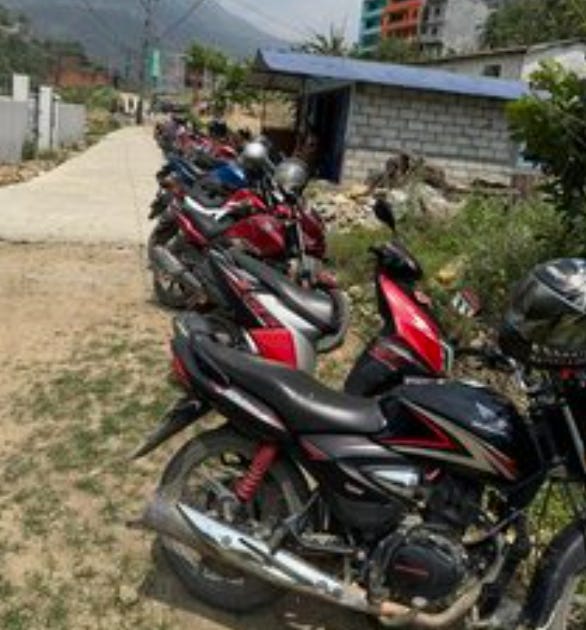
What is more affordable and more common is motorcycle/scooter transport, with either self-ownership or ride for hire. Nepal’s version of Uber/Lyft (in the major cities) even has a motorcycle transportation option, and it is roughly ½ the cost of a vehicle hire. Most of the motorcycles are low power, 150 cc or less, so capable of highway speeds, but barely. Helmets are required by law and usually worn, but we’ve also seen as many as four, no helmets, on a 150-cc motorcycle with all ages of riders, even infants carried in passenger’s arms or a toddler sitting in front of the driver holding onto the mirrors for balance. During the election, we witnessed a young man give his grandmother a motorcycle ride to the voting location. It was quite the site seeing an older woman with a cane maneuver getting on and off the motorcycle so easily. For us, Peace Corps has a No Motorcycle rule, so it is interesting to observe and a vital link for many, but not an option for us. It is ok for us to utilize are auto rickshaws, one step up from a motorcycle but not known for comfort. The drivers want a full rickshaw to maximize profit. You either wait until the rick-saw is full or pay for the empty seats
.
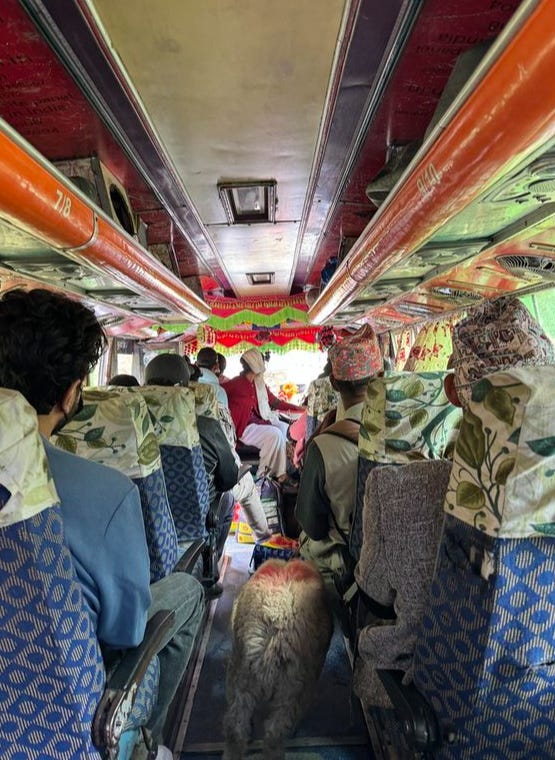
Between larger cities, there are various levels of bus service available, nothing fancy, but the higher-end ones will have designated seats and fewer stops. The local buses between towns have porters that ride in the door, ushering people aboard and collecting the fares as you travel. Seat spacing is also designed for 5’ tall people, but they are functional, low cost, and affordable for many. On a recent one-hour trip, the fare was $1.25 one way. Locals know which intersection to meet a bus. There are no set schedules for these local/regional buses. A bus may hang out until it is full or overflowing. The porters will always say there is more room at the back. We’ve managed to make connections with local shop owners at our closest intersection. They are kind to make sure we get on the correct bus. Much more challenging for us are the return trips as there is a designated bus park, but there is no sign.
The road quality is best stated as a work in progress. Occasionally, it is a paved four lane road that one can safely hum along at normal speeds. Just when you think the trip is going to stay smooth, the road transitions to an unsigned, under construction, rock/gravel road that has jeep-eating potholes. These road construction projects combined with narrow roads, potholes, and lots of blind switch backs, are best left to the astute driving ability of the bus, jeep and motorcycle drivers who travel the roads daily. The drivers have a horn honking code to communicate with each other. It works well!
We’ve yet to fly in Nepal, but many options exist from the larger cities. Air travel is outside our Peace Corps budget, but still very affordable and a huge time saver. From our district, it is roughly eight hours of bus riding and $20, or a 90-minute bus to an airport with hourly departing, ½ hour flights to Kathmandu for $150 total. If you are a tourist, you pay a higher price.
This brings us to our favorite mode of transportation, walking. Our village has numerous waking paths along the fields and so many stone stairs to traverse the elevation changes. A lot of the homes in our village do not even have vehicle access, just paths and steps. The layout of the paths and steps has us frequently walking through a neighbor’s patio. If they are outside working or chatting, which they almost always are, an invitation for tea and food is frequently offered and hard to resist. The old and the young walk these steps easily compared to us. We are like an old cow going down the steps making sure to get each foot placed well. The Nepalis glide and hop down the steps like young goats without a care in the world while wearing flip flops.
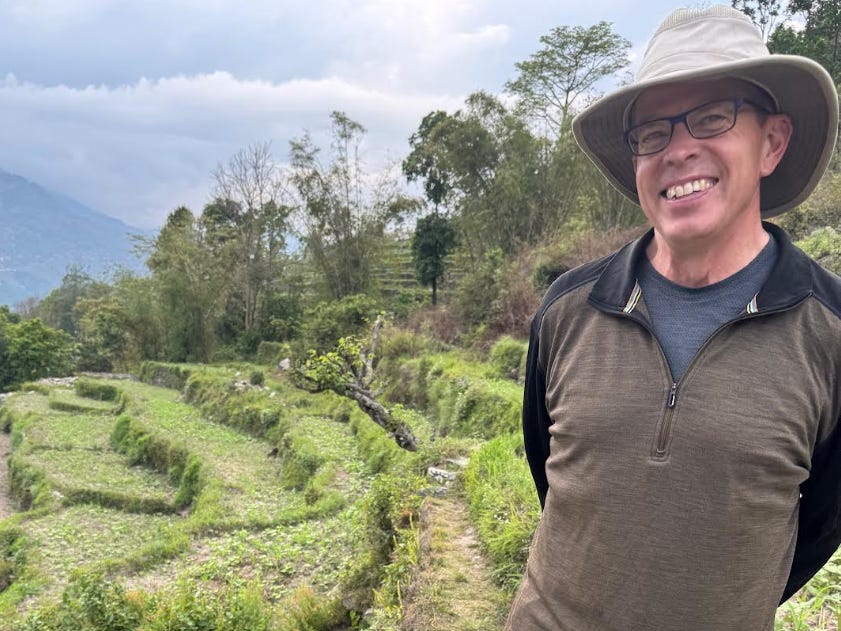
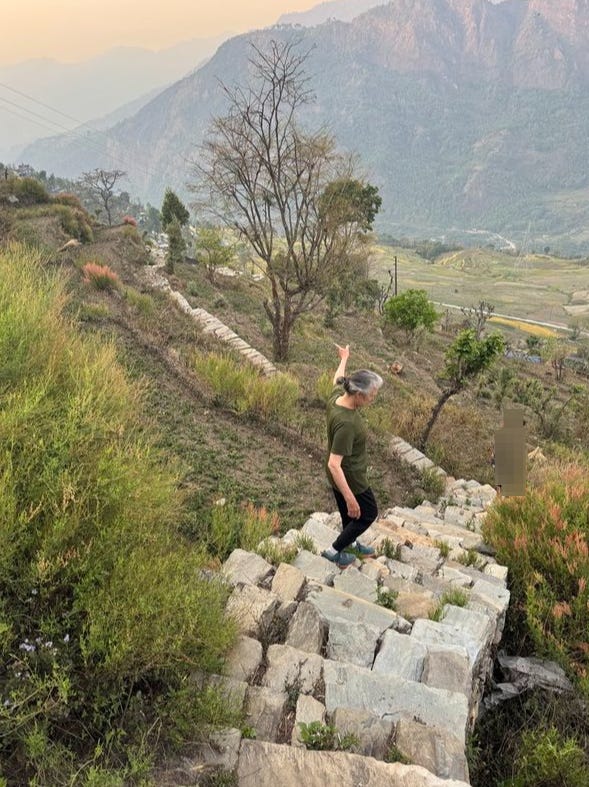
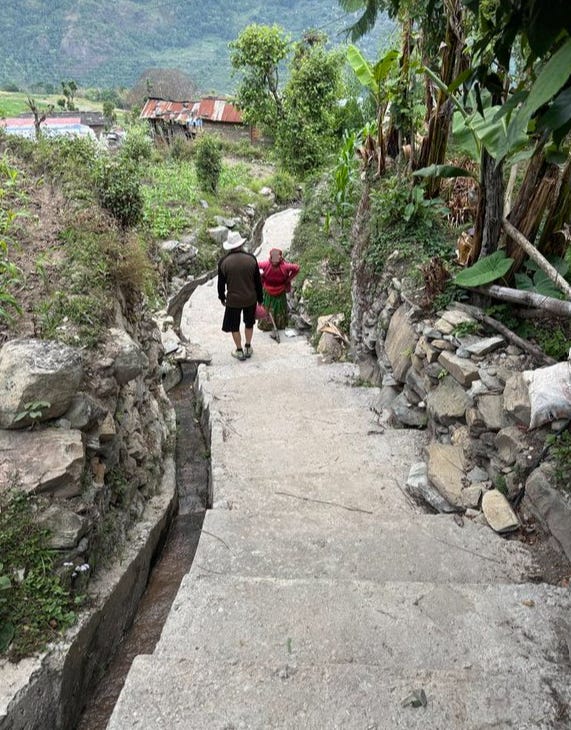
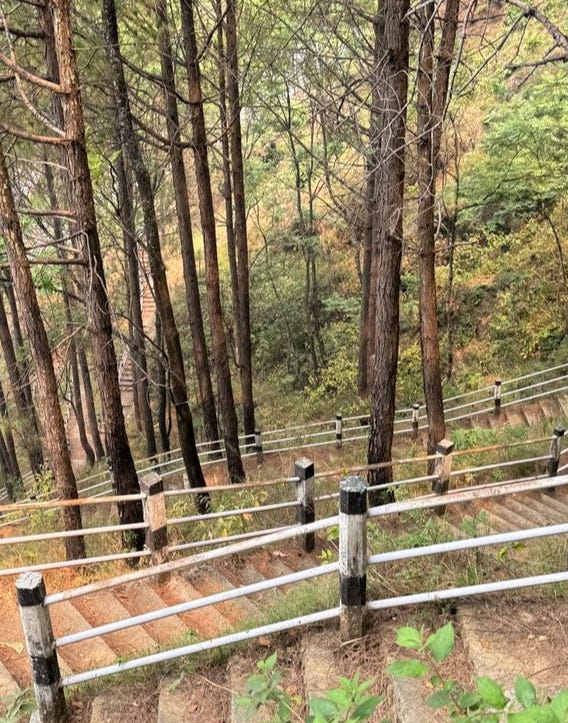
Our community has more elevation change than distance. For example, there is 1,300-foot elevation drop from our home down to the local market, but it is only about 1 mile in straight line distance. There are several paths/steps for us to take, one is even poured concrete steps with handrails. All longer established paths have “rest stops” along the way to take a rest and take in the view or have a chat with a neighbor. We truly enjoy these walks and are grateful to be physically able to hike down and back up the height of the Empire State Building in order to visit members of our ward (aka township) or buy some groceries. However, whenever it seems like we’re really doing well, one of our older local villagers walks past us with a full load on their back. It is good to be humble.
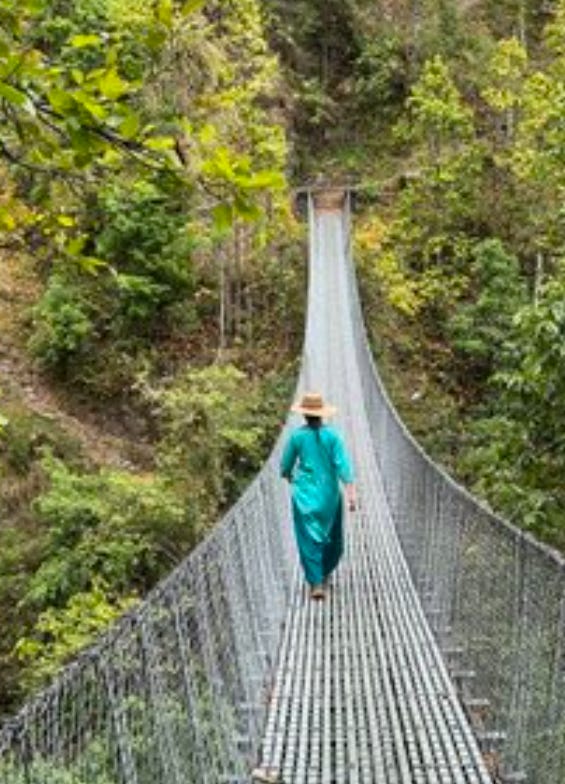
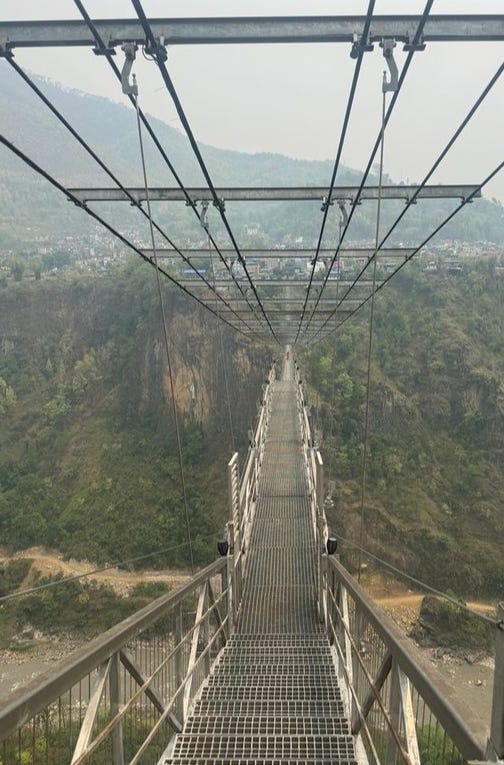
Our district is known for its suspension bridges. We have several in our ward and our district center town, Kushma, is known for its suspension bridges. One of the Kushma suspension bridges is privately owned and boasts the world’s second tallest bungee jump at 750’. Bungee jumping is also against Peace Corps rules. It is not on our bucket list!
That’s all for now. We appreciate the continued support we receive and welcome any questions. We’ll do our best to answer.
Steve & Liisa
This was fascinating and endearing. Please do this on other aspects of life in Nepal and your village! The segments could easily be compiled into a best-seller. I’m truly in awe of what you two are doing.
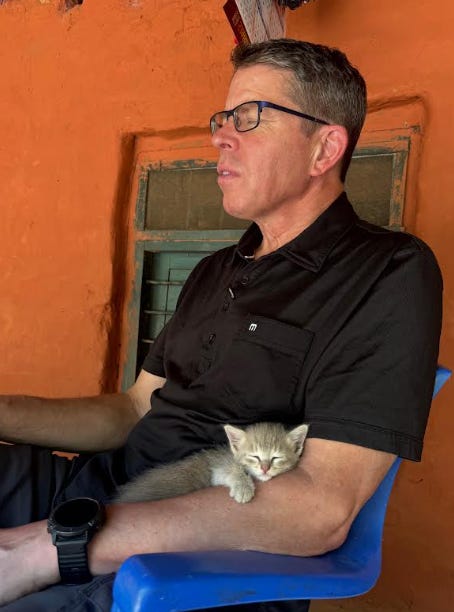
That pic of Steve & the kitten is the best! I am humbled by the “just make it work” response the people of Nepal seem to have. Thanks for sharing these slice of life moments.